
Wondering what concrete PSI for a driveway you actually need? Choosing the right PSI is one of the most important decisions for any driveway project. Use too little strength and the concrete cracks. Use too much and you overpay. In this guide, we explain exactly what PSI to use — and why.
What Does PSI Mean in Concrete?
PSI stands for “pounds per square inch.” It measures how much pressure the concrete can handle before it breaks.
The higher the PSI, the stronger the concrete. Therefore, choosing the right PSI for your driveway matters.
For reference, here are the most common PSI levels used in construction:
- 2,500 PSI — light residential use (patios, walkways)
- 3,000 PSI — standard residential driveways
- 3,500 PSI — heavy-use driveways and garage floors
- 4,000 PSI — commercial driveways and heavy vehicles
- 4,500+ PSI — industrial or extreme load applications
What PSI Concrete for a Driveway Is Recommended?
For most residential driveways, 3,000 to 3,500 PSI is the standard recommendation. Additionally, if you live in Florida, where heat and humidity affect curing, using 3,500 PSI gives extra durability and peace of mind.
Here is a quick reference table:
| Project Type | Recommended PSI |
|---|---|
| Standard home driveway | 3,000 PSI |
| Heavy-use home driveway | 3,500 PSI |
| Garage floor | 3,500–4,000 PSI |
| Commercial driveway | 4,000 PSI |
| RV or truck parking pad | 4,000–4,500 PSI |
Factors That Affect What PSI You Need
Several factors determine the right PSI for your driveway.
Furthermore, ignoring these factors can lead to cracks and costly repairs down the road.
- Vehicle weight: Regular cars need 3,000 PSI.
Heavy trucks or RVs need 4,000 PSI or more. - Climate: Florida heat speeds up curing.
Therefore, a slightly higher PSI helps maintain strength. - Soil conditions: Soft or sandy soil requires stronger
concrete to prevent settling and cracking. - Driveway thickness: A 4-inch slab needs at least 3,000 PSI.
However, a 6-inch slab can handle more load at the same PSI. - Usage frequency: Daily heavy use demands higher PSI than
an occasional-use driveway.
Ready-Mix vs Volumetric Concrete — Which Is Better for Driveways?
When ordering concrete for your driveway, you have two options.
Additionally, each option has advantages depending on your project size.
Ready-Mix Concrete:
- Pre-mixed at a plant and delivered by truck
- Best for large driveways (10+ yards)
- Fixed mix — you must use all that is ordered
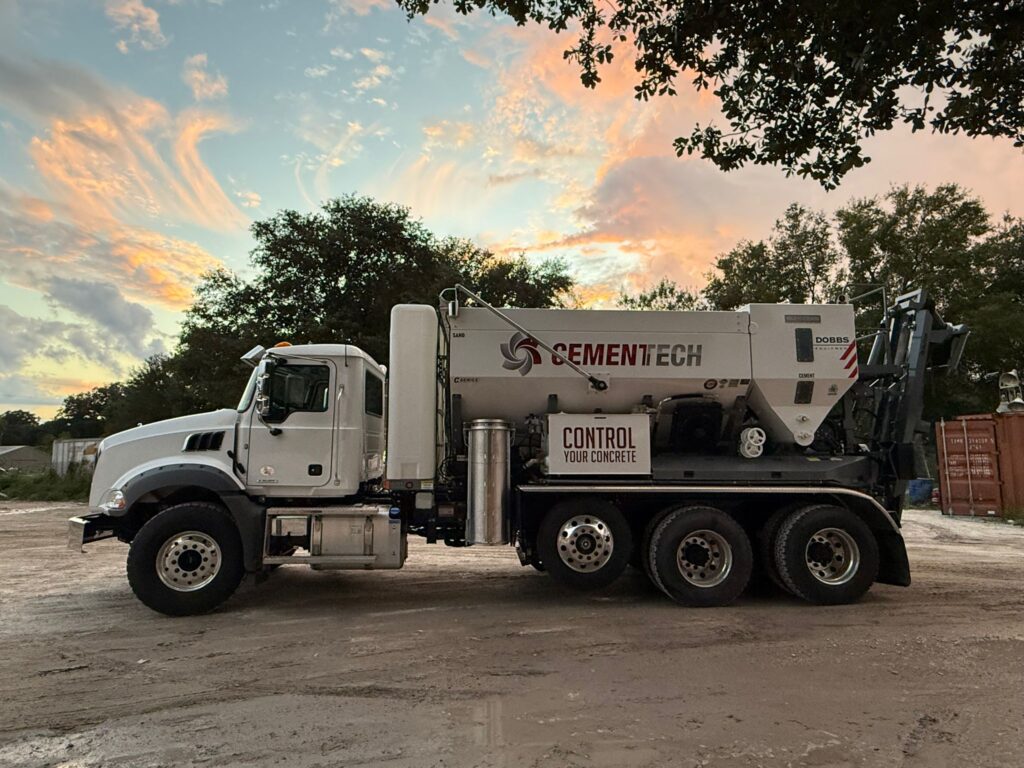
Volumetric Concrete:
- Mixed on-site by the truck
- You pay only for what you use — no waste
- Best for small to medium driveways
- Ideal for projects in tight or hard-to-reach areas
According to the Florida Department of Transportation, concrete used in Florida infrastructure must meet minimum strength standards based on project type and load requirements.
How Much Concrete Do I Need for a Driveway?
To calculate how much concrete you need, use this simple formula:
Length (ft) × Width (ft) × Thickness (ft) ÷ 27 = Cubic Yards
Example: A 20×10 ft driveway at 4 inches thick: 20 × 10 × 0.33 ÷ 27 = 2.4 cubic yards
However, always order 10% extra to account for waste and uneven ground. Furthermore, our team can help you calculate the exact amount you need — just call us.
Why Choose Concrete Mix USA for Your Driveway?
If you’re searching for what PSI concrete for a driveway in Central Florida, Concrete Mix USA is your local expert.
Additionally, we help you choose the right mix for your specific project and deliver it directly to your job site.
✅ Ready-mix and volumetric concrete available
✅ 3,000, 3,500 and 4,000 PSI mixes in stock
✅ Same-day and next-day delivery
✅ Serving Orlando, Davenport, Kissimmee and Central Florida
✅ Free quote in minutes
✅ DOT-approved concrete mixes
Frequently Asked Questions
Is 3000 PSI concrete good for a driveway?
Yes. 3,000 PSI is the minimum recommended for standard residential driveways. However, if you park heavy vehicles, use 3,500 PSI for better durability.
What is the best PSI for a driveway in Florida?
In Florida, 3,500 PSI is recommended due to heat, humidity and the effect of weather on concrete curing.
How thick should a concrete driveway be?
A standard residential driveway should be 4 inches thick.
Additionally, driveways used by heavy vehicles should be 6 inches thick.
Can I pour a driveway myself?
Small sections are possible as a DIY project. However, for a full driveway, professional delivery and finishing ensures better results and longer durability.
Get Your FREE Concrete Quote Today
Planning a driveway in Central Florida? Our team helps you choose the right PSI and delivers the concrete you need on time and at a fair price.
👉 [Request a Free Quote]
📞 [WhatsApp]