

When the thermometer climbs above 85°F, every concrete pour becomes a race against time. Heat accelerates hydration, drives water out of the mix, and shortens the window crews have to place, finish, and cure the slab before plastic shrinkage cracks start to form. For Florida contractors and builders working through long, humid summers, the difference between a slab that performs for decades and one that crazes within weeks often comes down to how a single hot-weather pour was planned and executed.
The good news: hot weather concreting is a solved problem. The American Concrete Institute’s ACI 305 guide, combined with practical experience from ready-mix suppliers, lays out a clear playbook. Below is a working contractor’s summary of the 2026 best practices for hot weather concrete pouring — what to ask your ready-mix supplier for, how to schedule the day, and how to protect the slab from mix to final cure.
Why Hot Weather Threatens Fresh Concrete
ACI defines hot weather concreting as conditions where high air temperature, low relative humidity, high wind speed, or strong solar radiation — alone or in combination — push the rate of evaporation high enough to threaten the quality of the freshly placed concrete. The practical placement range for fresh concrete is roughly 50°F to 90°F, with the 65°F to 75°F band considered the sweet spot.
Once you push past those numbers, several things happen at once:
- Faster setting time. A 20°F jump in mix temperature can roughly halve the working window.
- Higher water demand. Crews are tempted to retemper with extra water on site, which permanently weakens the mix.
- Plastic shrinkage cracking. When surface evaporation outruns bleed water, the top of the slab dries before it has the strength to resist cracking.
- Lower 28-day strength. Concrete cured at high temperatures often gains early strength quickly but ends up 10–15% weaker long-term.
The goal of every hot-weather practice that follows is the same: keep mix temperature down, slow surface evaporation, and protect the slab through the early curing window.
Plan the Pour: Timing, Weather Windows, and Logistics
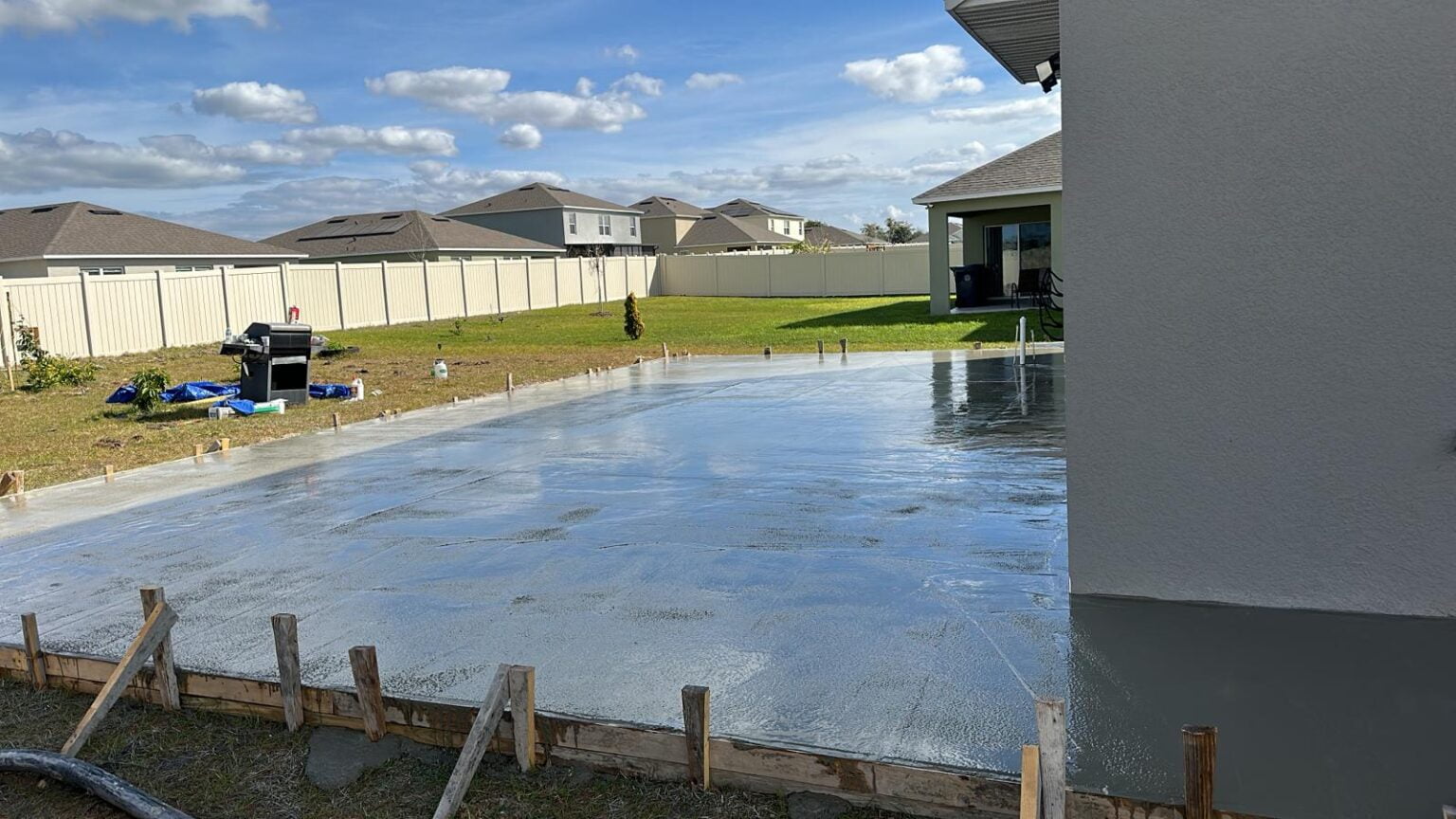
The single most powerful decision on a summer pour is when to start. In most of the Southeast, scheduling concrete delivery between 6:00 a.m. and 9:00 a.m. avoids peak ambient heat and direct solar load on the slab. Afternoon pours, especially on flat work like driveways and slabs-on-grade, are the leading cause of residential cracking complaints.
Build a simple pre-pour checklist
- Check the forecast for ambient temperature, relative humidity, and wind speed at the time of placement — not just the daily high.
- Use the ACI evaporation rate nomograph (or a free online calculator) to estimate surface evaporation. If the rate approaches 0.2 lb/ft²/hr, plan extra precautions before the truck arrives.
- Confirm crew size matches the pour volume. Hot-weather pours need more hands at the screed and float, not fewer.
- Stage everything before the truck rolls: wet down the subgrade and forms, position pump or chute, pre-position curing materials.
Pre-cool the surroundings
A subgrade or formwork sitting in the sun can be 110°F or hotter by mid-morning. Hosing down the subgrade and forms an hour before the pour drops surface temperature significantly and reduces moisture loss from the bottom of the slab. Avoid leaving free water in the forms when the truck arrives — you want damp, not flooded.
Mix Design Adjustments for Hot Weather Concrete Pouring
Most of the temperature control happens before the truck ever leaves the plant. When ordering, talk to your ready-mix supplier about the conditions you expect on site, not just the strength and slump.
Specify a maximum discharge temperature
ACI 305 recommends a maximum mix temperature at placement of 90°F, and many specifications tighten that to 80–85°F for flatwork. Suppliers control discharge temperature by chilling the mix water, substituting ice for part of the water, or using shaded aggregate stockpiles. Putting a number on your delivery ticket gives the plant something concrete to hit.
Use chemical admixtures designed for heat
- Type B or Type D retarders extend setting time by 30–90 minutes, which is often the difference between finishing a slab and chasing it.
- Hydration stabilizers are useful when haul times are long or when multiple trucks are queued in heavy traffic.
- Mid-range water reducers help maintain workability without adding water at the truck.
Consider supplementary cementitious materials
Replacing a portion of portland cement with fly ash or slag cement reduces the heat of hydration, slows the early reaction, and improves long-term durability. For thicker pours such as footings and mat foundations, this can also help control thermal cracking from internal temperature rise.
Placement and Finishing Techniques to Beat the Heat
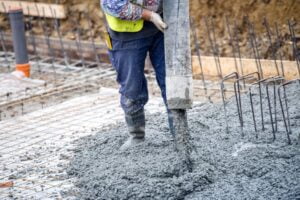
Once the truck is on site, the clock is running. The objective is to move concrete from chute to final position, screed it, and apply protection as quickly and smoothly as possible.
Reduce wait time at every step
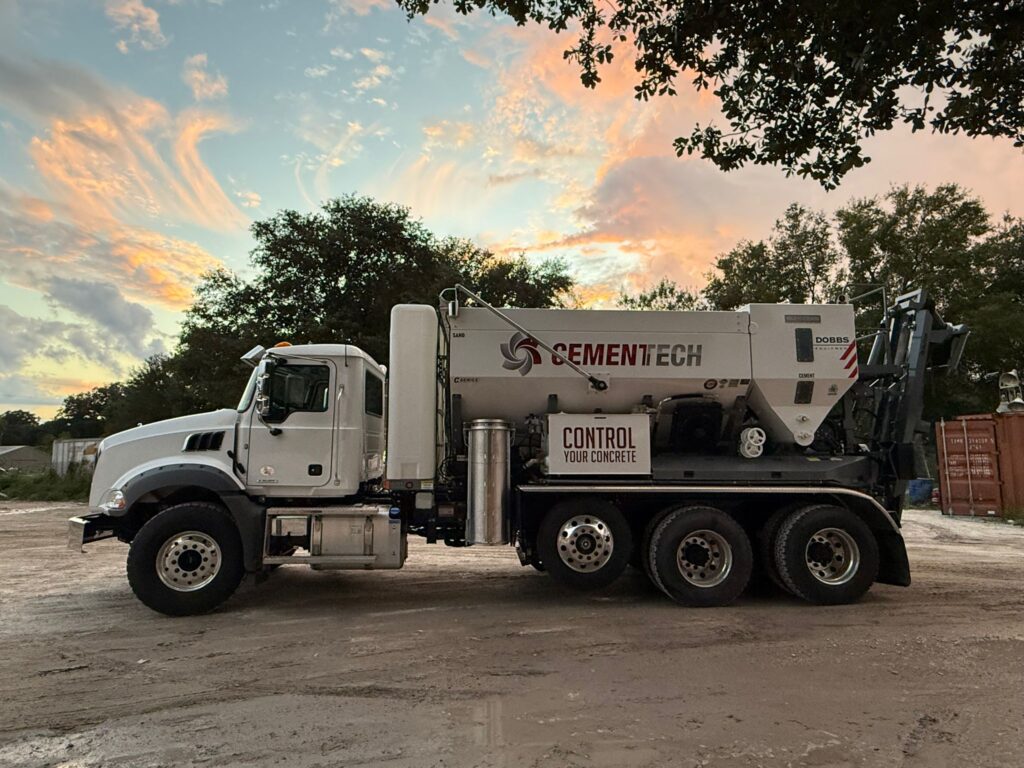
Stage trucks so there is minimal idle time on site. If the supplier uses a volumetric mixer, even better — concrete is mixed on demand and you only place what the crew can handle. For drum trucks, aim to discharge within 60 minutes of batching, and reduce that to 45 minutes when ambient temperature is above 90°F.
Protect the surface from evaporation
- Evaporation retarder. Spray-applied immediately after screeding and bull floating, this thin film slows surface moisture loss and gives the crew time to finish without surface crusting.
- Fog misting. A light fog of water above the slab raises local humidity. The goal is to humidify the air, not flood the surface — never finish water into the slab.
- Wind breaks and shade. Temporary screens, tarps, or shade cloth can drop evaporation rates by 30–50% on windy or sunny days.
Resist the urge to retemper
Adding water at the truck to restore slump is the single most damaging field practice in hot weather. Every gallon of added water can drop 28-day strength by 150–200 psi and increases shrinkage. If the slump is too low, call the supplier and let them adjust with a compatible admixture instead.
Curing: The Critical First 7 Days
Curing is where most hot-weather slabs are won or lost. Concrete needs continuous moisture and reasonable temperature to develop strength. Once the surface is finished, the protection plan should be in place within minutes — not hours.
Pick a curing method that matches the job
- Wet curing with burlap, soaker hoses, or wet cotton mats is the gold standard for high-end flatwork.
- Curing compounds applied at the recommended rate are the most practical option for large slabs and driveways. Confirm the compound is compatible with any planned coatings or toppings.
- Plastic sheeting works well for footings and walls but can cause discoloration on exposed flatwork.
ACI recommends maintaining moisture for at least 7 days for standard mixes, and longer when supplementary cementitious materials are used. In hot, dry conditions, plan to recharge wet curing daily and inspect curing compound coverage for thin spots.
Pulling It All Together
Hot weather concrete pouring is not about heroics on pour day — it is about decisions made the day before. Lock in an early-morning slot, communicate temperature and slump targets clearly with the supplier, stage the site to minimize wait time, and have curing materials on the ground before the first truck arrives. Crews that operate this way consistently produce slabs that meet specification, look clean at the surface, and hold up under decades of Florida sun.
If you have a summer pour coming up and want help dialing in the right mix, discharge temperature, and admixture package for the conditions on your site, the team at Concrete Mix USA can walk through your plan and put together a delivery schedule built around hot-weather best practices. Reach out before pour day — the earlier the conversation, the smoother the placement.